Low-Level Radioactive Waste Disposal Center


Low-Level Radioactive Waste Disposal Center
At nuclear power plants, operations and maintenance generate low-level radioactive waste, such as work clothes, gloves, and water and paper used to clean the power plant floors. At each power plant, liquid waste is first boiled and concentrated. The concentration is solidified by being mixed with cement and then sealed into drums. Flammable waste is burned and sealed into drums.    Non-flammable waste, such as metal, is compressed or melted when possible, and then sealed into drums as well. These waste drums are temporarily stored at each power plant, and then they are transported to our Low-Level Radioactive Disposal Center.

In accordance with the concept of burying low-level radioactive wastes generated nuclear fuel cycle facilities in this disposal center in the future, we plan for the ultimate capacity of the Low-Level Radioactive Waste Disposal Center to be 600,000m3.

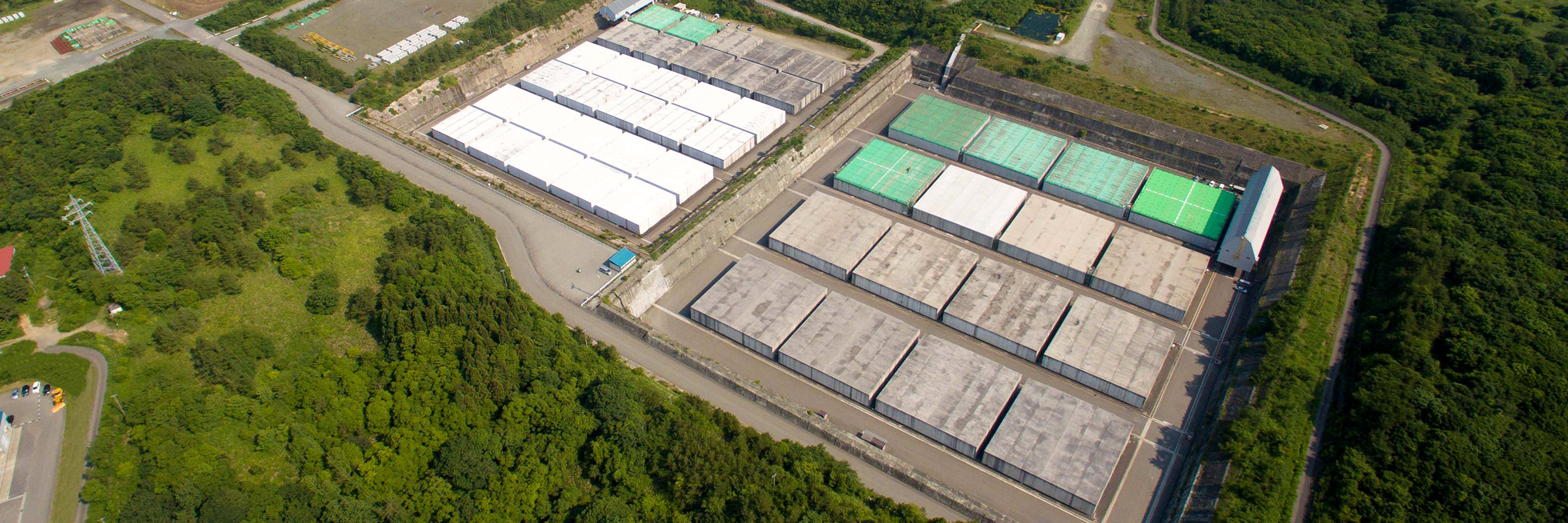
Approved for a total capacity of 80,000m3 (400,000 200-liter drums), the center has now No.1 Disposal Facility in operation with a capacity of 40,000m3 (200,000 200-liter drums) and No.2 Disposal Facility with capacity equivalent to that of No.1 Disposal Facility.


Transportation

Waste packages that have passed inspection at each power plant are then transported to our Low-Level Radioactive Waste Disposal Center by ship and truck.

Inspection

Final inspection is made on the waste packages when it's brought into our Low-Level Radioactive Waste Disposal Center.

Stacking Drums

Waste packages are stacked inside the disposal facility.

Filling with Mortar

Mortar is poured in the spaces between the waste packages.

Covering with Concrete

A reinforced-concrete lid is placed on the top of the disposal facility, resembling a monolithic rock.

Covering with Soil

Inspection tunnels are attached to the disposal facility.
The top and sides of the facility are covered with a mixture of water-impervious soil and bentonite (a kind of clay). The top of it is covered with a layer of soil, above which sod (grass) are planted.